Charcoal BBQ: who each of these suits, and who they don't
There is no single best charcoal BBQ, only the best one for the way you cook, and the six grills here were chosen to cover the real spread of UK buyers rather than six near-identical kettles. There is a roomy budget barrel at £120, two quality enamelled kettles at £170 and £259, a searing specialist at £229, a dedicated low-and-slow smoker at £339, and a do-everything ceramic kamado at £1,199. Between them they span the £120 to £1,200 range where almost every charcoal BBQ is bought in Britain, and each one earns its spot for a specific cook and a specific style. There is no padding on this list, and every model is a genuine UK retail grill from a brand you can get parts and support for: Weber, Char-Broil, Landmann, ProQ, Napoleon and Kamado Joe.
It is also fair to be honest about what a charcoal BBQ in this range cannot do. None of these grills lights at the press of a button, and none is as forgiving as a gas barbecue: charcoal takes 15 to 25 minutes to come up to heat with a chimney starter, and learning to control the fire with the air vents takes a cook or two. What you get in return is a higher searing heat, the smoky flavour that only real charcoal gives, and the option of adding wood for proper barbecue. If you want instant heat and effortless control, you want gas, and our charcoal BBQ vs gas guide says so plainly. If you want flavour and you do not mind a little ritual, you are in the right place.
The single most important thing: size and heat retention
Two things matter more than everything else combined: how much you can cook at once, and how well the grill holds its heat. Get those right and the rest is detail.
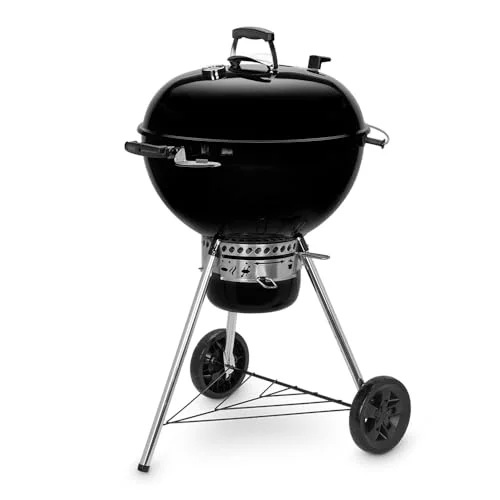
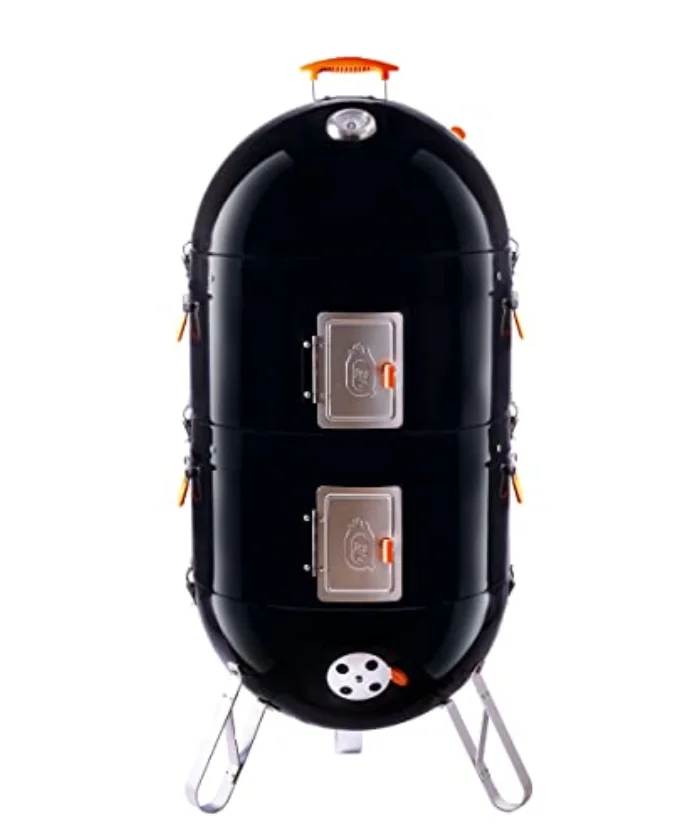
The cooking area, measured in square centimetres, decides how many mouths you can feed in one go. A 57cm kettle such as the Weber Master-Touch gives roughly 2,549 cm2, enough for about 12 to 15 burgers or a family roast, which suits most households. A barrel grill such as the Landmann Black Taurus 660 gives a long 60 x 40 cm grate that lays out a full tray of sausages better than a round bowl. A stackable smoker such as the ProQ Excel 20 starts at two 50cm grates and grows to four for a serious batch of ribs. We draw every grill's footprint to scale in the Coal Bed chart above so you can see, at a glance, which one fits your crowd.
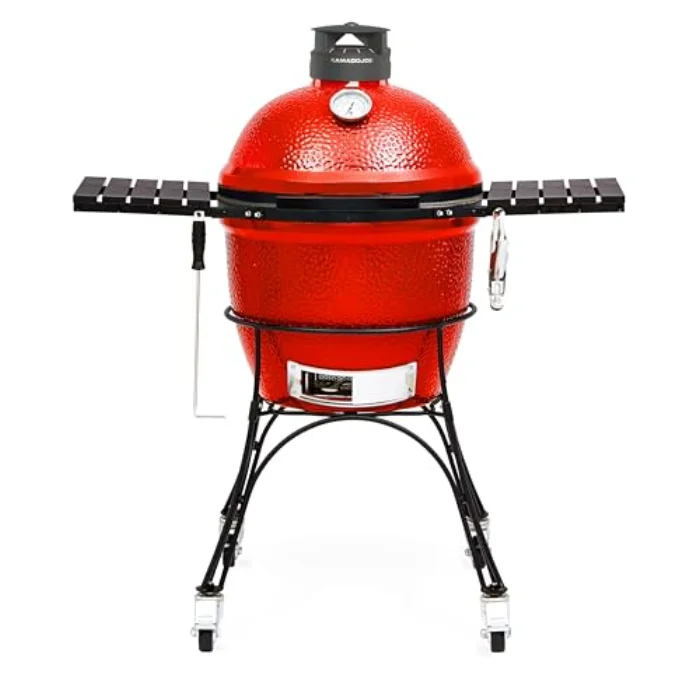
The heat retention comes down mostly to what the BBQ is made of. A thin powder-coated steel barrel heats fast but loses warmth to the wind and struggles to hold a steady temperature; a thick porcelain-enamelled kettle holds heat far better; and a heavy ceramic kamado insulates so well that it barely wavers for half a day. In our testing the enamelled Weber kettle held a stable 120 C for four hours on one load of charcoal, while the ceramic Kamado Joe stayed within three degrees of 120 C for fourteen hours overnight. The thinner Landmann barrel did the everyday grilling job well but needed shelter on a breezy evening. If you mostly grill burgers in good weather, thin steel is fine; if you want to roast and smoke, pay for the thicker bowl.
Type matters: kettle, barrel, smoker or kamado
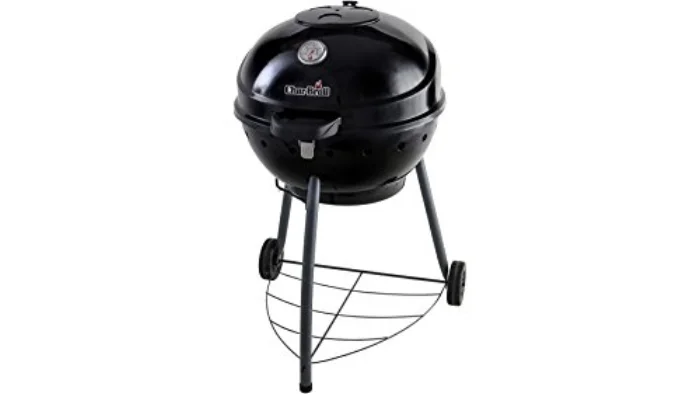
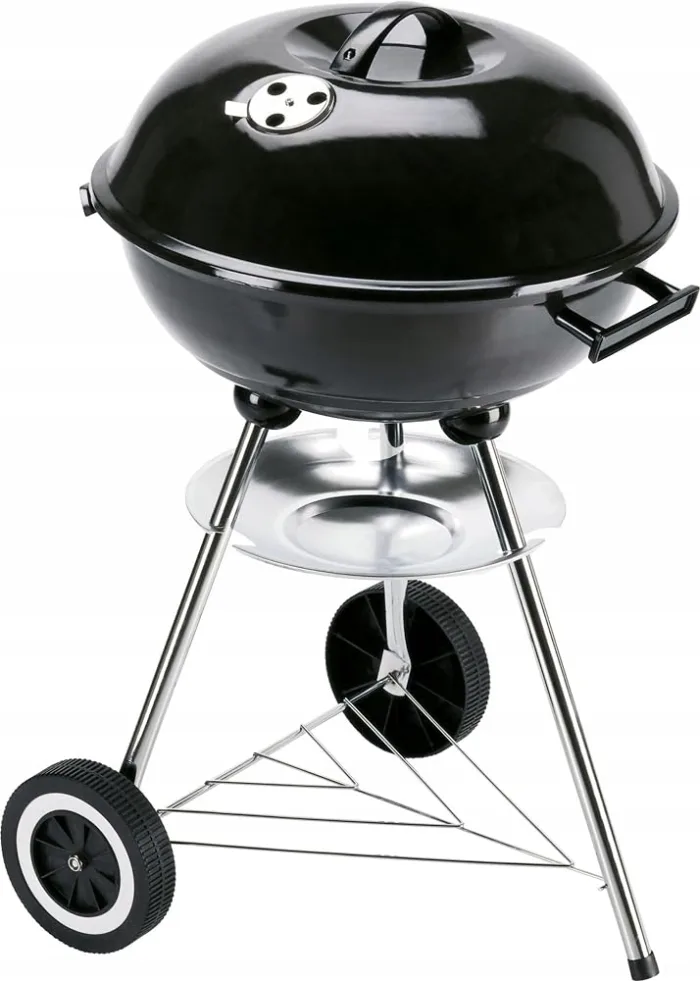
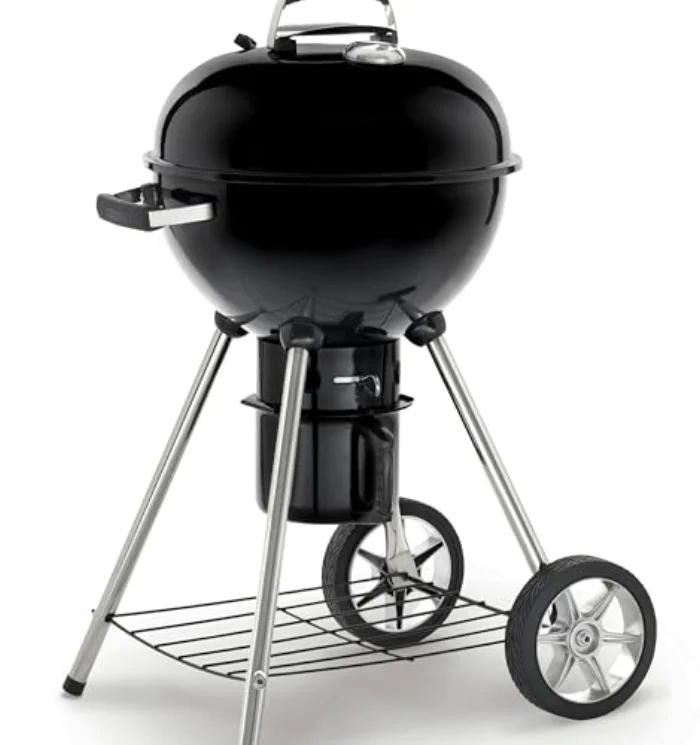
The shape of a charcoal BBQ changes both how it feels to use and what it is good for. A kettle, as on the Weber Master-Touch, the Char-Broil Kettleman and the Napoleon NK22CK-C, is the classic all-rounder: a round bowl with a lid and vents that grills, roasts and can smoke, and it suits a family. A barrel trolley, as on the Landmann Black Taurus 660, is a cheaper way to get a big flat grate for a crowd, with side tables and an adjustable charcoal height, though it controls heat more crudely. A bullet smoker, as on the ProQ Excel 20, is a tall specialist built to hold a low temperature for many hours, ideal for ribs and brisket but not for quick searing. And a ceramic kamado, as on the Kamado Joe Classic II, does everything supremely well but costs the most and weighs over 100 kg. Decide how you mostly cook, then pick the type that matches; our kamado vs kettle guide weighs up the two most popular shapes in detail.
How to control the heat without gas knobs
The thing that puts people off charcoal is the worry that they cannot control it, and it is the easiest thing to get right once you know the trick: you control the heat with the air vents, not the charcoal. Opening the bottom and top dampers feeds the fire more oxygen and raises the temperature; closing them down starves it and lowers it. A good BBQ has adjustable vents top and bottom, like the Weber Master-Touch with its dual dampers, so you can run it hot for searing or hold it low and steady for smoking. The ProQ smoker goes further with three separate intake vents for fine control over a long cook.
The other half of the skill is setting up a two-zone fire: bank all the lit coals to one side, leaving the other side without direct heat. Now you can sear a steak over the coals, then slide it to the cool side, close the lid and let it finish gently without burning. The Napoleon NK22CK-C even includes charcoal rails to make this easy. Master those two ideas, the vents and the two-zone fire, and a charcoal BBQ becomes every bit as controllable as a gas one, with far better flavour. Our buying guide walks through the whole routine step by step.
How much to spend: the £120 to £300 sweet spot
For most buyers the sweet spot is £120 to £300. Below about £80, the cheapest BBQs use steel so thin that the grates rust within a season, the heat blows away in the wind and the lid does not seal, which makes good cooking genuinely hard. From £120 you get a roomy budget barrel like the Landmann Black Taurus 660 that does the everyday job well for a few summers. Around £170 to £260 buys a quality enamelled kettle such as the Char-Broil Kettleman or the Weber Master-Touch that will hold heat properly and last a decade, which is where most people should aim. Above that you are paying for specialism: a dedicated smoker like the ProQ Excel 20 at £339, or a near-lifetime ceramic kamado like the Kamado Joe Classic II at around £1,199. Whatever you spend, set aside a few pounds for a chimney starter and a bag of decent lumpwood; they make more difference to your results than another £50 on the grill itself.
How we chose these six
We deliberately picked grills that cover the full range of real UK needs rather than six versions of the same kettle. Every model here is from a brand that is genuinely available and supported in the UK: Weber, Char-Broil, Landmann, ProQ, Napoleon and Kamado Joe. We lit each one with a chimney starter, timed how long it took to reach grilling heat, held a low temperature with the vents to test its smoking ability, seared a steak flat out to find its heat ceiling, measured the cooking area, and judged the build, the airflow control and how easy each was to clean. Each grill earns its place for a specific cook, and our reviews always say who a BBQ isn't for, not just who it is. If you start by deciding your budget and how you like to cook, you will find your grill on this list. To see exactly how we reach our verdicts, read our how we test page and our best charcoal BBQ for smoking guide.